The physics, plainly
A camera that measures temperature, and everything that changes what it can show
On the day
What the camera is doing
- Step 1
It measures surface temperature
A radiometric thermal camera records infrared radiation given off by a surface and converts it into a temperature value for every pixel in the image. That is the whole mechanism. It is not an X-ray, it does not see through materials, and it does not detect water, air movement or missing insulation directly.
- Step 2
It shows a difference, not an absolute answer
What makes a thermal image useful is contrast: one part of a roof or wall running warmer or cooler than the material around it. A uniformly warm or uniformly cold surface, however extreme the actual temperature, shows nothing interesting on screen, because there is nothing to compare it against.
- Step 3
The visual camera checks the story
Every thermal frame is matched against a visual photograph of the same area from the same flight. A warm patch that lines up with a chimney breast, a lintel or a roof valley is telling a very different story to one that lines up with a rooflight, a vent, or a patch of direct sun.
- Step 4
The read happens once, on one day
A thermal image is a snapshot of a building's surface at a specific moment. It does not show how the temperature pattern changes hour to hour or season to season, which is why the report is careful to describe the conditions the flight was flown in alongside the findings themselves.
The report
What is in the report
Visual and thermal pairs
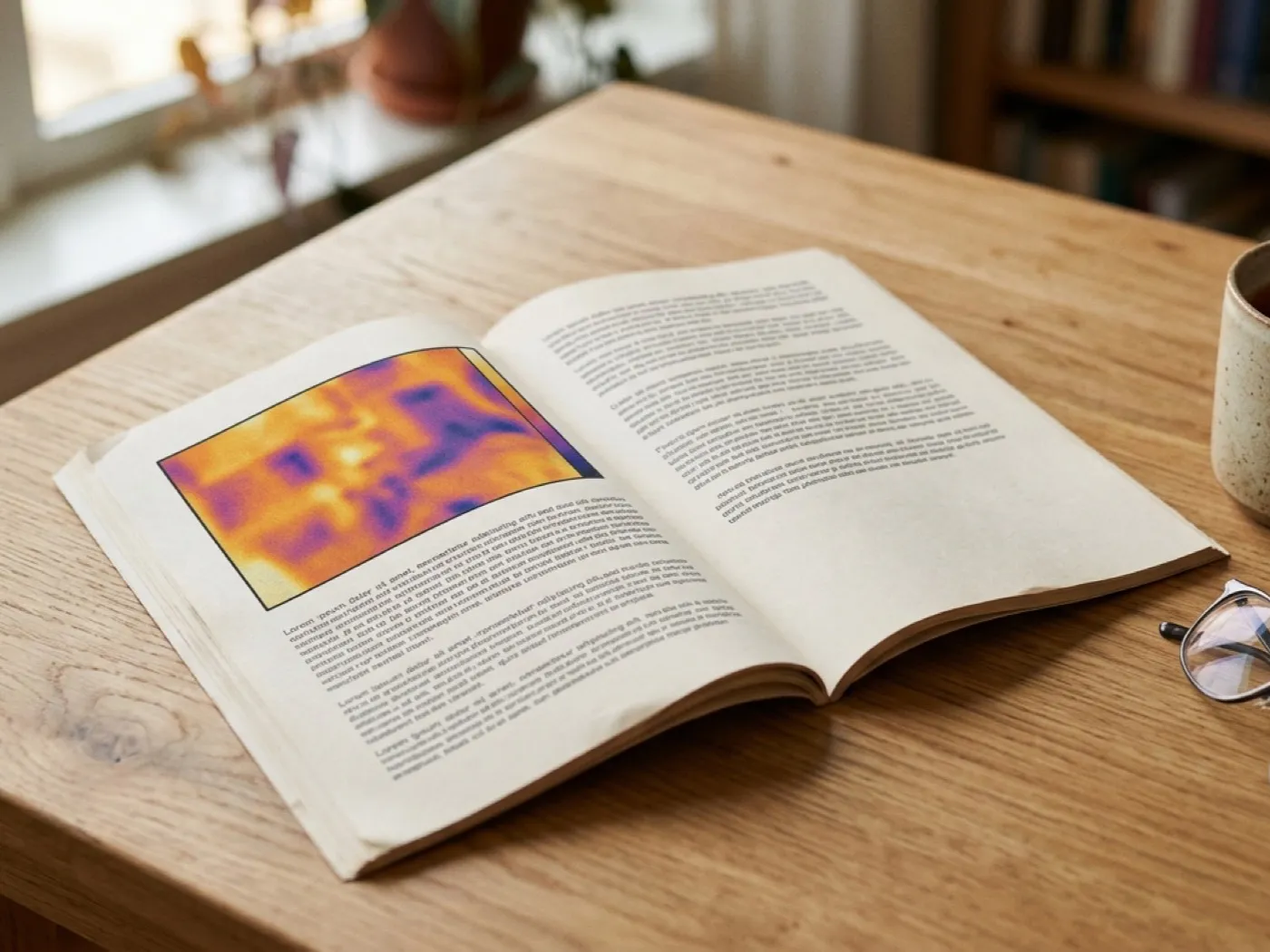
Every significant thermal finding is shown alongside the matching visual photograph, so nobody has to take the temperature reading on trust.
Plain description of each finding
What the pattern is, roughly where it runs, and what it most likely means, written so it can be handed to a contractor without translation.
A confidence note on every finding
Some patterns are close to certain. Others are suggestive but would benefit from a physical check. The report says which is which rather than presenting every finding with equal weight.
Conditions the flight was flown in
External temperature, recent weather, and how long the heating had been running, because those conditions are part of what makes a finding meaningful.
What could not be read
Any area affected by reflection, recent rain, direct sun or a material that does not read reliably, listed plainly rather than left out.
The original files
Full resolution thermal and visual images, so an installer or contractor can look at the evidence directly rather than a compressed screenshot.
Why 48 hours
Because matching every finding to its visual image and writing a plain, straight account of what it does and does not show takes real time, and a report that arrives a fortnight later has usually stopped being useful for the decision it was meant to support.
Weather and rules
When a thermal flight works, and when it does not
Dawn, after a cold, clear night
Overnight the building loses heat to a clear sky while any internal heating keeps working against it, so by first light the temperature difference between a well insulated area and a poorly insulated one is at its widest for the day. This is usually the single best window for a whole-building or heat loss survey.
A cold, clear evening, for a flat roof
Flat roofs work the other way round. A day of solar gain followed by a clear evening lets wet, denser material release its stored heat more slowly than the dry material around it, so the evening after a bright day is usually the best window for a flat roof moisture survey.
Wet roofs and recent rain
A surface that is actively wet cools by evaporation, which produces its own temperature pattern that has nothing to do with what is happening beneath it. It can mask a genuine defect entirely or create a false one. Flights are timed to avoid standing water and recent rain wherever the forecast allows it.
Sun-warmed surfaces
Direct sun heats whatever it touches, regardless of what is underneath, and that warmth lingers for hours after the sun has moved on. A wall or roof slope that has been in full sun during the day can still read warm well into the evening for reasons that have nothing to do with insulation, which is why flight timing accounts for sun angle across the whole day, not just the moment of the flight.
Reflective and metallic surfaces
Some metal roofing, certain modern cladding and highly glazed finishes do not radiate their own temperature reliably. Instead they reflect the temperature of whatever they are facing, often the sky, which can read as a false cold or false warm patch that has nothing to do with the building fabric. Where a survey includes material like this, it is flagged as unreliable for a thermal read rather than presented as a clean result.
No usable temperature difference
Mild, still, overcast weather with no recent heating pattern to work against gives the camera very little contrast to show. A flight in these conditions is more likely to be moved than flown, because a survey that produces a flat, uninformative image is not worth the visit.
Before you book
Common questions
- What does a thermal camera actually see?
- Surface temperature, nothing more. It shows where an outside surface is warmer or cooler than its surroundings on the day it was flown. It does not see through a roof or a wall, and it does not detect water or lost heat directly, it detects the temperature difference that a defect often, but not always, leaves at the surface.
- Why does the time of day matter so much for this survey?
- The camera needs a real temperature difference to show anything. A house that has warmed evenly in the afternoon sun gives the camera almost nothing to read. Dawn after a cold, clear night with the heating running overnight, or a clear evening after a sunny day for a flat roof, are usually when a reading is worth having.
- Does the survey work on a wet roof, or straight after rain?
- Not reliably. Wet surfaces cool by evaporation in a way that can hide a genuine defect or create a false one, so a flight is timed to avoid it where possible. If recent rain has limited what could be read on the day, the report says so rather than presenting an unreliable image as a clean result.
- Can bright sun ruin a thermal reading?
- Yes. A surface heated directly by the sun, or reflecting it, can read warm for reasons that have nothing to do with the building underneath, which is one of the more common ways a thermal image gets misread by someone without the background to separate the two. It is why the flight is planned around light and sun angle as carefully as it is planned around temperature.
- What about a reflective roof or shiny cladding?
- Reflective and highly polished surfaces, some metal roofing and certain modern cladding among them, can reflect the temperature of the sky or a nearby object rather than showing their own surface temperature, which produces a false reading. Where a roof or elevation includes material like this, it is flagged in the report as unreliable for a thermal read rather than presented as a clean result.
- Do I need to be there for a thermal flight?
- No. A lawful launch point and permission to be at the property is enough. What does help is knowing the heating pattern in the building beforehand, so a quick message the day before about whether the heating has been running as normal is often part of arranging the flight.
- What do I get at the end?
- A written report within 48 hours, pairing the visual and thermal images, a plain description of each finding and what it most likely means, a confidence note on each one, and a clear list of anything the conditions on the day meant could not be read reliably.
- How much does a thermal survey cost?
- A fixed price per survey, agreed before the visit, based on the address, the size of the building and which of the three surveys fits the job. Send the address and what you want looked at and the figure comes back rather than a range.
See what it can and cannot see
Book a thermal survey with Thermal Drone Survey
Tell us the address and what you need looking at. Sam Hembury will come back with a fixed price and the next available slot.